Now that Brother Angus has told us the legend of C, it's time to gather around THIS GUY HERE and listen to the Legend of Linux.
About 15 years after the Univac guys built Unix on C because it was a funny, funny joke, computers had gotten smaller and easier to buy and not nearly so likely to have chainsaw arms. Not that they were friendly yet or anything, but at least they would talk to you without you sacrificing a goat first and lighting some black candles. And this one guy from Finland named Linus Torvalds, who was at the time (1) a student with practically no sense of humour and (2) deeply unimpressed with the operating system his computer came with, decided to write his own operating system. He wanted it to be kinda like Unix only instead of being for very very expensive computers that you had to hire guys with beards to run for you, it would be for small, pretty cheap computers that you had to be a guy with a beard to want to run yourself.
He posted about it on what passed for an internet back then, and decided that the best way to get people to use his new friend (LOOK MA I BUILT MYSELF A FRIEND that's nice dear, now eat your porridge) would be to give it away. And not just give it away, but give it away so hard that the people he gave it to had to give it away as well.
Giving something away that hard is called 'GPLing it'. You can call it copyleft too, if you want, but don't because you'll embarrass us.
So it turns out that giving away something as useful as an operating system is a good way to make friends with people who think it's impressive to give away an operating system, so now Linus has a lot of friends and people who want to be his friend because they're impressed with him. And he can yell at them if he wants, and all they can really do is yell at other people because if they make Linus angry he'll tell them they're bad and they'll be banished to neverland or something, I don't know I never figured that part out.
And that's why Linux is Linn-ucks and not Line-X, because Linus says his name Linn-us. And that's why it's still no good for people who don't have beards, because it's written mostly by a guy who only wants to be friends with people who are like him, who might have made up their own operating system if he hadn't beaten them to it.
Now someone tell the story of Apple!
Thursday, April 17


Tuesday, April 1
Metareview: Philosophy of science in kids' films
This review by Mary Elizabeth Williams earns five stars. Why? She concludes with the following observation:
When scientists and skeptical thinkers are portrayed as pooh-pooh killjoy wet-blanket snotty/snobby wrongheaded villains in just about every Hollywood picture, that's really nice to hear.
The film is no overcaffeinated Narnia-like religious allegory, though. Horton and the mayor aren't hearing things. When the burden of proof falls to each of them, they scramble to produce hard evidence. And it's a nice touch, one not in the original story, that the first person to believe the mayor is a scientist. "Horton" may owe a debt to the notion of childlike belief, but any movie that fills Whoville with ladders that look like DNA strands and shows sound waves pulsing through the atmosphere is a movie that celebrates reason. It's probably not a coincidence that it's from the creators of the "Ice Age" films, which gave pretty wide latitude to Darwinism.
When scientists and skeptical thinkers are portrayed as pooh-pooh killjoy wet-blanket snotty/snobby wrongheaded villains in just about every Hollywood picture, that's really nice to hear.
Thursday, March 27
Lore on iPods
This blog has forged several links to the inimitable comedic stylings of the great Lore. This week, he outdoes himself in an article about finally joining the "International Order of Dancing Silhouettes."
Link
I want useful playlists. I want "Tori Amos songs that make a damn lick of sense." I want "Beck songs where the rhythm track doesn't sound like he's throwing Ben Wa balls at an armadillo." I want "Nick Cave songs that aren't explicitly about bleeding to death."
Link
Wednesday, March 26
Advertising
A titan of the advertising industry died recently, and of course metafilter has a comment thread about it. The comments, predictably, fall into two rough categories: "holy crap ads suck" and "I'm in advertising, ripping on me is lame and boring, you're the one with the problem if you can't make rational decisions in the face of advertising".
I'm in the first camp.
But I'd like to think that my position is a bit more nuanced than "I don't like watching ads"; in my opinion, modern advertising is immoral because (1) it manufactures demand, thereby distorting the market and (2) it does so by exploiting human irrationality.
Advertising is a necessary part of a market economy, because without information about what products are available consumers can't send price signals to manufacturers effectively. The problem starts when advertising stops being about adding information to the market ("this product is available, here are its features, this is its price") and starts being about distorting the demand curve ("here's my stuuuuuuffff, you know you waaaaaant it"). I'm not a libertarian free-markets-solve-everything kind of guy who'd tell you that all market distortions are bad, but I do think that markets are a very good way to distribute goods effectively and that distortions to them should be examined carefully and allowed to happen only if doing so improves society as a whole. Demand-manufacturing advertising doesn't improve society. The money spent on bottled water and meaningless tchotchkes and $40 T-shirts would be better spent elsewhere, on products for which demand doesn't have to be manufactured. The economic activity generated by the business model of "create a product, then create demand for that product" only rarely advances society.
The advertising industry, to the extent that it displays any conscience at all, tends to think that those two business models (create product, manufacture demand & analyze demand, create product) are equivalent; they make arguments like "If you the consumer have some sort of psychological problem where you can't stop yourself from buying Acme Co's Air In A Tube (New, improved, fresher!) because you saw an ad for it, that's your problem". But it isn't your problem if Acme Co's ad agency has enough understanding of psychology to use sex and fear and other subconscious mechanisms to sell you air in a tube. Or, even worse, to aim the ad at your kids, who are not capable of rational thought (that's why we don't let them vote or decide what to have for dinner, right?).
As long as ads are aimed at children, as long as luxury SUVs are presented as necessary, as long as the difference between "want" and "need" is blurred on purpose, I'll think of advertising as immoral.
Wednesday, January 30
Thursday, May 31
When Salon Commenters Make You Laugh
I think Gpanos, in a comment to this here Salon article, summarized one of life's greatest truths:
"Similarly, Swisher and Mossberg agreed that in Apple's current ad campaign pitting the frumpy "PC Guy" against the hipster "Mac Guy," John Hodgman's PC Guy is more likable."
This is probably because hipsters are cool in theory, but suck in practice, like Communism.
Friday, May 11
Spread your wings.
Go on, you're not going to hurt anyone. Least of all me.
Give those bastards a good flap, rev the engines, see what kind of dust devils you can kick up. Smell that warm, soft, leathery smell; take a look at that beautiful shadow. Haha yeah, it'd be a metal cover if it wasn't noon on a grassy park lawn. Of course it feels weird, you have two more friggin limbs! All right, now JUMP. Jump and beat. That's it, ride it, don't think too hard.
Fly.
Thursday, May 3
The past tense of 'to cleave'
A popular tool in a butcher's shop is a cleaver. After a cleaver's been used on a piece of meat, that meat is...cleaved? it's not cleft or cloven, but is it clove?
Perhaps the butcher clove the meat, and now the meat is cleaved. Can anything other than hoofs be cloven? can anything other than a chin be cleft?
Perhaps the butcher clove the meat, and now the meat is cleaved. Can anything other than hoofs be cloven? can anything other than a chin be cleft?
Wednesday, May 2
"There ain't no Moore's Law for neurons"
Watts says, in this comment thread, : "There ain't no Moore's Law for neurons."
Well, OK, but there should be. Maybe this is just my not-so-latent singularitarian/extropian streak talking, but there bloody well should be a way to get this giant piece of almost-meat in my head to be more efficient with its inputs and, as a consequence, develop new capacities.
Well, OK, but there should be. Maybe this is just my not-so-latent singularitarian/extropian streak talking, but there bloody well should be a way to get this giant piece of almost-meat in my head to be more efficient with its inputs and, as a consequence, develop new capacities.
A pied kiwi: wikipedia BURNS MY EYES
So I'm flipping through Wikipedia's articles on complexity theory and cellular automata, by way of reading about the controversies related to Stephen Wolfram's book A New Kind of Science. This was all sparked by news of Mathematica 6's release.
Then, I stumble upon the fascinating fact that some very simple rules are Turing Complete. In the process, I read a certain Wikipedia article, the object of today's post, that has visual examples of the basic computations that Rule 110 is capable of performing.
These images (in fact, almost all conventional images of one-dimensional cellular automata) would be a lot more interesting if I could look at them for longer than 3 nanoseconds.
Warning: severe eyeball abrasion ahead.
The Rule 110 Cellular Automaton (scroll down for images)
Thursday, April 26
When Film Geeks Make you Laugh
A comment on one of the Onion AV club's DVD reviews made me laugh out loud(-erskates). Regarding the film "Shakes the Clown" by Bob Goldthwait, SK73 says
The Boston Herald famously described 'Shakes' as "the 'Citizen Kane' of alcoholic clown movies."I mean sure, the Boston Herald probably gets the credit there, but still. That killed me. Maybe I'm going soft.
Tuesday, April 24
Pop is Crap: co-conspirators
Oh, how I deeply love to rant about the inanity and stupidity of pop culture. (All in good fun, of course. You know how much I really love you, Pop Culture!)
Much to my enjoyment, there are many others who do so much better than I. First is Amelie Gillette, the blogger behind The Hater. Her every post is a pop-culture-eviscerating Garden of Earthly Delights.
And then, courtesy of MeFi, there's this article in the Village Voice, which gleefully mocks (by way of Venn Diagrams) the song by Mims called "This is Why I'm Hot." Although really, you don't have to go much farther than to quote the lyrics:
Much to my enjoyment, there are many others who do so much better than I. First is Amelie Gillette, the blogger behind The Hater. Her every post is a pop-culture-eviscerating Garden of Earthly Delights.
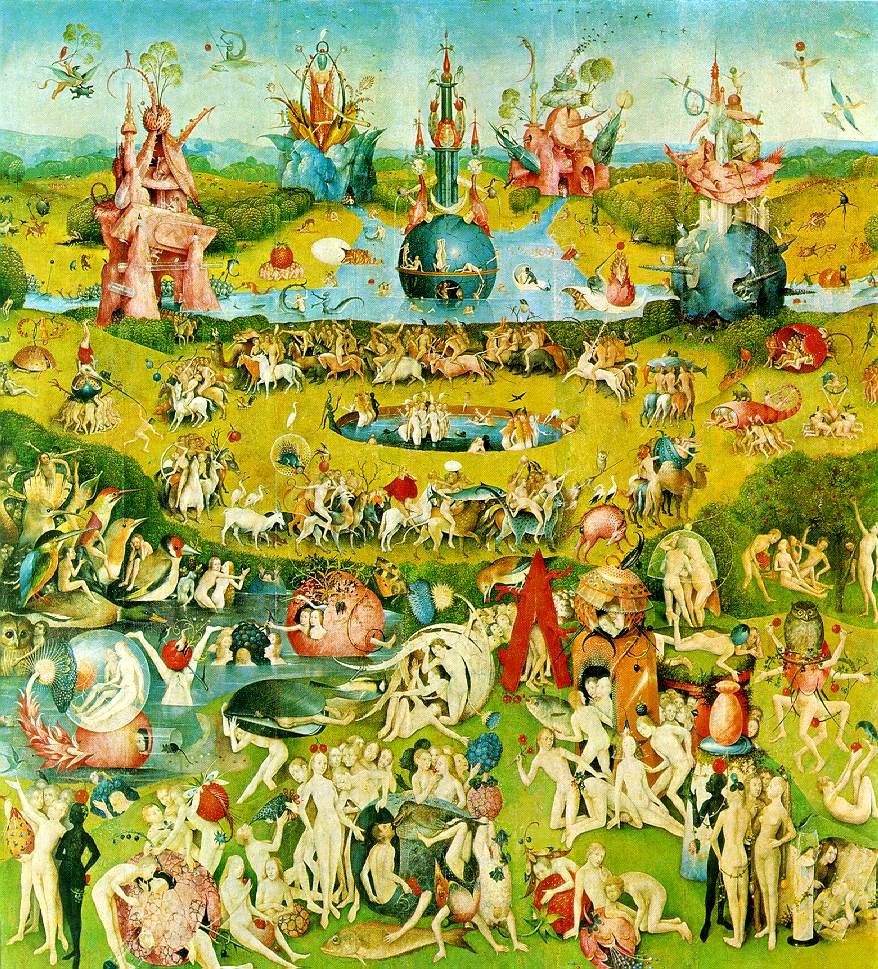
And then, courtesy of MeFi, there's this article in the Village Voice, which gleefully mocks (by way of Venn Diagrams) the song by Mims called "This is Why I'm Hot." Although really, you don't have to go much farther than to quote the lyrics:
This is why I'm Hot [2x]A graphical dissertation on the number one song in America
This is why [2x] Uh
This is why I'm Hot (Uh)
This is why I'm Hot [2x] Whoo
This is why [2x]
This is why I'm Hot
I'm hot cause I'm fly (fly)
You ain't cause you're not (Mims)
This is why [2x]
This is why I'm hot [2x]
Monday, April 23
Stross, Again
Charlie Stross' Hugo-nominated novella Missile Gap is avialable online for free. It's pretty dark fiction; a classic story of war determining not who's right, but who's left. I read it through in a couple hours, and it had a powerful effect. Perhaps a bit muddied with exposition, but overall a very solid piece of work.
Talking about it with the Pharaoh, it occurred to me that Peter Watts (whose full name I'm spelling out here for ease of ego-surfing) and Stross both are teaching me the lesson I've heard Ellison and Bradbury and Spider Robinson (in full-on fellate-Heinlein-mode) blather about: SF as mind-expanding, scary stuff that teaches us as much what we're scared of the future being as what the future will be.
The thrust of the argument never really made sense to me. Their stories all seem...tame. Bradbury's tales of mars-people and sun-rockets and Tall They Were, And Golden-Eyed are...nice. Like, "That's nice, Timmy" kind of nice. Even Ellison seems more like the neighborhood pest of a kid trying to wreck automobiles with a slingshot rather than any kind of genuine menace. And then there's Stross and Watts, holding your head under water together while bellowing philosophy of the mind at you. Demonstrating the finer points of interspecies competition by watermelon-off-a-balconying your dog with a sledgehammer.
And my (grand?)kids are going to read them and think "that's nice, Pete and Charlie."
Monday, March 26
By Force of Personality
Rob Bray's recent blogpost By What Authority is a quite persuasive argument against the Intelligent Design movement. The essential thrust is that biblical literalism is at the root of ID, and biblical literalism is hard to take seriously in light of the demonstrated functionality of atomic bombs.
In addition to being -- in my mind -- persuasive, it also avoids the trap of talking past its opponents; unlike Dawkins or Dennet or any of the other "bright" crowd (goodness gracious how I detest that term). It argues from similarity, rather than from difference.
In addition to being -- in my mind -- persuasive, it also avoids the trap of talking past its opponents; unlike Dawkins or Dennet or any of the other "bright" crowd (goodness gracious how I detest that term). It argues from similarity, rather than from difference.
Wednesday, March 14
the Horror
Things the web thinks have horror in them:
o blimps
o XML
o culture
o Frankenstein (1970)
o Party Beach (1964)
o Iraq, in poetry
o The Heights
o European Colonization
o the Werewolf
o Battery Hens
o Coke
o Software Patents
o Disney's Old Yeller
o going bald
I dunno, they all seem pretty...banal to me. Except possibly Iraq and European colonization.
Ideas and ideas and ideas
I have idea paralysis.
I have been reading a lot of random stuff lately, and listening to music I haven't listened to in a year or so, and it's giving me all sorts of quarter-formed ideas about random things like:
o Why Ole Bald Angus' "jokes are not good for laffs" is wrong
o How I could possibly extend the ideas in Blindsight
o The Pharaoh's challenge to me re: story-writing
o The visual image of unfurling batwings
I don't know what to do with them.
No Good Metaphor
The Web thinks there are no good metaphors for:
o too-hard poetry
o compassion in solitude
o a "space" that we cooperatively occupy mentally
o neutrality in prison
o hunting and serving
o the idea behind Einstein's most famous equation
o "this degree of absolute wrongness"
o the release of Ann Coulter's new book
I'd add "generating software" to that list. I can't think of any way to describe what it is that I do for a living to relatives that doesn't involve blank stares of....
dammit, I just thought of one. Magic.
As per Stross in the introduction to Atrocity Archives, imagine a learned cabal whose entrance requirements are long and careful study, that invents multiple new languages and thoughts to express its primary motives, that causes the world to change by the correct and highly ritualized codification of thought, that warps its members' perceptions and actions, that's impenetrable to outsiders
(though they may benefit from the cabal's work), that can create or destroy person-years of economic effort just by uttering incantations. Now dress them in jeans and scruffy T-shirts with SIGGRAPH '88 logos, and call them "IT".
Thursday, March 8
A pied kiwi: wikipedia randomness, lunacy edition
This XKCD comic neatly summarizes the problem with Wikipedia. I fall prey to this almost every day. But instead of letting these hundreds of hours of go to waste, I will use "A Pied Kiwi" to inform you of the most fascinating, serendipitous tidbits that I discover.
Today, in the entry for lunatic:
Today, in the entry for lunatic:
The word is borrowed from Latin"lunaticus", which gains its stem from "luna" for moon, which denotes the traditional link made in folklore between madness and the phases of the moon. This probably refers to the symptoms of cyclic mood disorders such as bipolar disorder or cyclothymia , the symptoms of which may also go through phases. As yet there is little evidence for any causal link between phases of the moon and the progression of mood disorder symptoms.You probably knew that already. But then,
In a 1999 Journal of Affective Disorders article, a hypothesis was suggested indicating that the phase of the moon may in the past have had an effect on bipolar patients by providing light during nights which would otherwise have been dark, and affecting susceptible patients through the well-known route of sleep deprivation. With the introduction of electric light, this effect would have gone away, as light would be available every night, explaining the negative results of modern studies. They suggest ways in which this hypothesis might be tested.Yes! Test that hypothesis! Bring back lunacy!
Friday, March 2
But it's Art! Experimental Art! DO NOT CRITICISE THE ART (please)
The Pharaoh and I were talking recently about the art collective musical ensemble band named Of Montreal (wikipedia link; stupidiculous vanity site) a few days ago. He thinks they have good hooks in thought-provoking, progressive pieces. I think they have decent hooks that they ruin with a lack of songwriting skill (learn what meter means, fuckers). In other words, he likes them and I don't.
It seems to me that the notion of experimentality, of avant-gardishness, is just a defense mechanism against criticism. "It's not bad, it's ART." OK, I suppose you could be challenging the definition of "art" or "song" or "quality", but the road down which those challenges lie - i.e. postmodern relativism -- leads almost exclusively up its own asshole. The perfect expression of any craft -- whether it's musicianship, carpentry, painting, game design, whatever -- comes from creativity within the bounds of the form. Difference without alienation; creativity without abandonment of form; novelty with familiarity. On that front, Of Montreal's experiment fails; their music doesn't sound good.
Some rules you can bend, others you can't. Mastery of a form is knowing which is which.
Friday, January 12
Reviews: Music
Yo La Tengo: I Am Not Afraid Of You And I Will Beat Your Ass
OK, Yo La Tengo. We both know you think this is all some kind of enormous joke. Mood metal, fuzzy bass-heavy psuedojungle, power pop, and treacly emo chamber music? All in the first 8 tracks? But I'm going to get you anyway: I'm going to enjoy it all, just to spite you.
Mogwai: Mr Beast
More spare, expansive mood metal from the acknowledged masters thereof. If you like it, you'll like it; if you think that distortion pedals don't have a place outside arenas and rock bars pretending to be arenas, you'll probably want to give it a miss.
Dire Straits: On Every Street
An old record; released in 1994, On Every Street was Dire Straits' last hurrah. Showcasing lead singer and guitarist Mark Knopfler's increasing interest in Country as a genre, especially as it intersects the Blues. Displaying their typical lyrical mix of sad ballads about war and nihilistic pop tunes about partying, this is actually my favourite Dire Straits album.
Drive-by Truckers: The Dirty South and A Blessing and a Curse
Take country's regret and sadness and complaint about the unfairness of the world. Mix it half-and-half with Alt-rock's anger and malaise. Add a great deal of musical craftsmanship and some genuine pathos, and you have a ridiculously clichéd review of a couple of very, very good alt-country albums.
Radiohead, OK Computer
Why did nobody tell me this album was actually good? ...ok, why didn't I listen?
Sloan, A Sides Win: Singles 1992-2005
Sloan's one of those bands whose singles I've always enjoyed, to a point; none of them really ever grabbed me enough to make me buy a record, but when I saw a collection of their singles on eMusic the opportunity was too good to pass up. I wasn't disappointed: all the harmonized vocals, major-chord power pop, and goofy lyrics I remembered liking on the radio, all in one place.
Stars, Set Yourself On Fire and Nightsongs
A friend introduced me to the Stars, describing Set Yourself On Fire as "an album either for falling in love or killing yourself". Ah-yup. Soft melodies, a male/female vocal combo that at its best pulls at the heartstrings mightily and at its worst is entirely tolerable, and masterful arrangement.
Tragically Hip, World Container
Another 3 years, another Hip album, another painful exhibition of how ruined a rocker's voice can get. Downie's lyrics are still in top form -- obtuse poetry that somehow is all the more meaningful for its obtuseness -- but his recent musical training, and his voicebox ravaged by twenty-plus years of touring? has led him to create arrangements? that never resolve? and always end phrases on an upnote? make the album? sound? like a valley girl?!? and it's tragically annoying, because that's really the only flaw the album has.
The Black Keys, thickfreakness
I'm just going to quote the eMusic user Earwax here:
The Decemberists, Picaresque
Brainy indie "pop" -- a word that, in The Decemberists' case, covers the gamut from persian-influenced rock to sea shanties about revenge, via early-18th-century folk ballads -- is about as close as it's possible to come to describing this masterpiece of an album. A great album to walk to work to; there's more than enough content, musically and lyrically, to occupy a mind on what otherwise would be a wasted half-hour.
The Hold Steady, Boys and Girls in America
4 guys? Check. Drums? Check. Bass? Check. Lead Guitar? Check. Singer/Rhythm Guitar? Check. Rock songs about partying, getting wasted, recovering from getting wasted, and partying some more? CHECK. An uncomplicated, unpretentious rock record that does exactly what it sets out to do: entertain you for 40 minutes, then leave you smiling and wanting more.
TV On The Radio, Desperate Youth, Blood Thirsty Babes
This one, unfortunately, was a mistake. falsetto duets over tweedlyboop electronic beats, with random noise samples thrown in to approximate drums? Maybe I just don't get it.
OK, Yo La Tengo. We both know you think this is all some kind of enormous joke. Mood metal, fuzzy bass-heavy psuedojungle, power pop, and treacly emo chamber music? All in the first 8 tracks? But I'm going to get you anyway: I'm going to enjoy it all, just to spite you.
Mogwai: Mr Beast
More spare, expansive mood metal from the acknowledged masters thereof. If you like it, you'll like it; if you think that distortion pedals don't have a place outside arenas and rock bars pretending to be arenas, you'll probably want to give it a miss.
Dire Straits: On Every Street
An old record; released in 1994, On Every Street was Dire Straits' last hurrah. Showcasing lead singer and guitarist Mark Knopfler's increasing interest in Country as a genre, especially as it intersects the Blues. Displaying their typical lyrical mix of sad ballads about war and nihilistic pop tunes about partying, this is actually my favourite Dire Straits album.
Drive-by Truckers: The Dirty South and A Blessing and a Curse
Take country's regret and sadness and complaint about the unfairness of the world. Mix it half-and-half with Alt-rock's anger and malaise. Add a great deal of musical craftsmanship and some genuine pathos, and you have a ridiculously clichéd review of a couple of very, very good alt-country albums.
Radiohead, OK Computer
Why did nobody tell me this album was actually good? ...ok, why didn't I listen?
Sloan, A Sides Win: Singles 1992-2005
Sloan's one of those bands whose singles I've always enjoyed, to a point; none of them really ever grabbed me enough to make me buy a record, but when I saw a collection of their singles on eMusic the opportunity was too good to pass up. I wasn't disappointed: all the harmonized vocals, major-chord power pop, and goofy lyrics I remembered liking on the radio, all in one place.
Stars, Set Yourself On Fire and Nightsongs
A friend introduced me to the Stars, describing Set Yourself On Fire as "an album either for falling in love or killing yourself". Ah-yup. Soft melodies, a male/female vocal combo that at its best pulls at the heartstrings mightily and at its worst is entirely tolerable, and masterful arrangement.
Tragically Hip, World Container
Another 3 years, another Hip album, another painful exhibition of how ruined a rocker's voice can get. Downie's lyrics are still in top form -- obtuse poetry that somehow is all the more meaningful for its obtuseness -- but his recent musical training, and his voicebox ravaged by twenty-plus years of touring? has led him to create arrangements? that never resolve? and always end phrases on an upnote? make the album? sound? like a valley girl?!? and it's tragically annoying, because that's really the only flaw the album has.
The Black Keys, thickfreakness
I'm just going to quote the eMusic user Earwax here:
"Okay, who are these guys? Has Hendrix come back as two white guys from Ohio? Has Cream reformed under an assumed name?"Blues rock at its fuzziest, a bluesman's voice over thick, crunchy guitars over a drum set that does more than just hold down 2 and 4.
The Decemberists, Picaresque
Brainy indie "pop" -- a word that, in The Decemberists' case, covers the gamut from persian-influenced rock to sea shanties about revenge, via early-18th-century folk ballads -- is about as close as it's possible to come to describing this masterpiece of an album. A great album to walk to work to; there's more than enough content, musically and lyrically, to occupy a mind on what otherwise would be a wasted half-hour.
The Hold Steady, Boys and Girls in America
4 guys? Check. Drums? Check. Bass? Check. Lead Guitar? Check. Singer/Rhythm Guitar? Check. Rock songs about partying, getting wasted, recovering from getting wasted, and partying some more? CHECK. An uncomplicated, unpretentious rock record that does exactly what it sets out to do: entertain you for 40 minutes, then leave you smiling and wanting more.
TV On The Radio, Desperate Youth, Blood Thirsty Babes
This one, unfortunately, was a mistake. falsetto duets over tweedlyboop electronic beats, with random noise samples thrown in to approximate drums? Maybe I just don't get it.
Subscribe to:
Posts (Atom)